
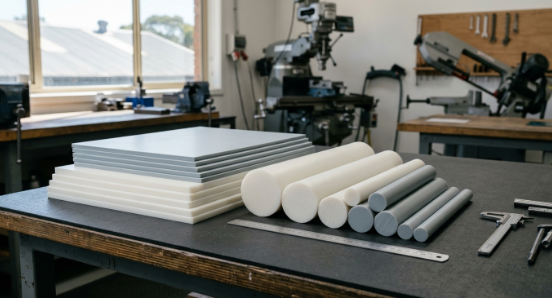
Polypropylene (PP) is a lightweight thermoplastic valued for chemical resistance, low moisture absorption, and practical fabrication options. It is found in everything from packaging to process tanks, but choosing it for a working component requires more than recognising those advantages.
Operating temperature, chemical concentration, mechanical loads, and the shape of the finished part can all change the recommendation. This guide explains the material, compares common grades, and shows where polypropylene sheets or rods make sense alongside alternatives such as HDPE and PVC.
What Is Polypropylene? A Quick Answer
Polypropylene is a semi-crystalline plastic made by joining propylene molecules into long polymer chains. It belongs to the polyolefin family, alongside polyethylene. Its density is typically around 0.90–0.91 g/cm³, so it is light enough to float in water. Many grades offer useful resistance to acids, alkalis and moisture, making PP a candidate for industrial containers, laboratory equipment and machined components.
Polypropylene is not one universal specification. A material identified simply as PP may have different impact performance, additives, approvals and allowable service temperatures from another PP product.
How Is Polypropylene Manufactured?
Manufacturers produce polypropylene through the polymerisation of propylene, a small hydrocarbon molecule. Industrial catalysts help connect the molecules and control the arrangement of the polymer chains. The resulting resin is commonly supplied as pellets before being processed into a useful shape.
Extrusion turns molten resin into continuous products such as plastic sheets, rods, profiles and film. Injection moulding creates repeatable items including closures, housings and fittings. Other processes are used for fibres and specialist products.
Forming method, cooling conditions and additives influence the final material, which is why a grade suitable for moulded packaging is not automatically right for a welded industrial tank.
What Are the Main Types of Polypropylene?
PP-H: Polypropylene homopolymer
PP-H is made primarily from propylene units. It is generally the stiffer option and is often considered for rigid sheet fabrication, chemical-processing equipment, and machined fittings. Its relative stiffness can be useful for panels that need to hold their shape, although thickness, supports and operating temperature still determine the final design.
PP-C: Polypropylene copolymer
PP-C contains another monomer, commonly ethylene, to modify its behaviour. Impact copolymer grades generally provide improved toughness, especially where knocks or cooler conditions are concerns. This may be valuable for protective housings, containers, or equipment exposed to handling impacts. A copolymer is not necessarily stronger in every sense; stiffness and impact strength are different measures.
What about random copolymers and PP-R?
Random copolymers are another polypropylene family, often selected for properties such as clarity or specialised piping performance. PP-R is associated with particular pressure-pipe systems. These designations should not be treated as interchangeable with general-purpose PP-H or impact PP-C sheet. For industrial fabrication, confirm the exact grade rather than relying on the abbreviation alone.
Key Physical and Chemical Properties
• Low weight: PP’s density of approximately 0.90–0.91 g/cm³ makes it attractive where mass matters.
• Chemical resistance: Many grades resist common aqueous acids, alkalis, and salts, but strong oxidisers and some organic chemicals can be problematic.
• Moisture resistance: Low water uptake helps components retain performance in damp and wash-down environments.
• Stiffness: PP-H is generally stiffer than HDPE, although stiffness declines as temperature rises.
• Electrical insulation: Unfilled grades usually provide useful insulating behaviour; conductive formulations differ.
• Heat behaviour: Typical PP melts around 160–170°C, but its permitted continuous working temperature is much lower and grade-dependent.
• Fatigue resistance: Suitable moulding grades can tolerate repeated flexing in living-hinge designs.
Do not design a component from a generic melting-point figure. Ask for the grade’s technical data sheet and check temperature limits under load, exposure duration, and the environment in which the part operates.
Advantages and Limitations of Polypropylene
When polypropylene is a sensible choice
PP can combine low weight, chemical tolerance and relatively economical fabrication. Sheets can be cut, bent and joined using appropriate plastic-welding processes. Rods can be machined into fittings or parts when suitable tooling and fixturing are used. This flexibility is valuable where a custom solution is needed without investing in a mould.
Where the material needs caution
Standard polypropylene may lose toughness in cold conditions and deteriorate with prolonged sunlight unless properly stabilised. It expands noticeably with heat, can creep under sustained load and is difficult to bond with ordinary adhesives because of its low surface energy. Chemical resistance must always be checked against the actual substance, concentration and temperature; a general statement that PP ‘resists chemicals’ is not enough.
Where Is Polypropylene Used in Industry?
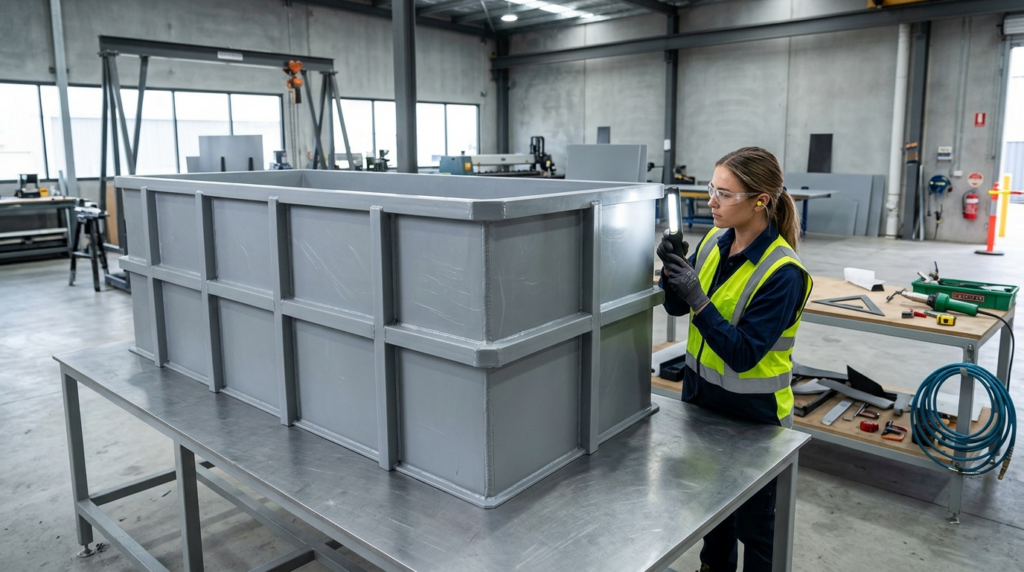
Chemical processing and storage
Rigid polypropylene is considered for chemical tanks, secondary containment trays, ducting and fume-handling equipment where the chosen grade has been verified for the intended chemical. Weld design, wall thickness, operating temperature and the possibility of long-term stress all matter. For hazardous chemicals, check container compatibility and workplace controls rather than selecting a tank solely by polymer name.
Australian workplaces may refer to Safe Work Australia’s guidance on storing hazardous chemicals when assessing container suitability, segregation and safe handling.
Food processing and laboratories
Polypropylene can be useful for trays, guards, containers and laboratory fittings that encounter water or routine cleaning. However, food-contact suitability is a property of a documented grade and finished application, not every product carrying a PP label. Cleaning chemicals, repeated heat cycles and any required declarations should be checked before procurement.
Manufacturing, transport and components
Automotive trim, battery enclosures, equipment housings and industrial fittings use different polypropylene formulations depending on their loads and conditions. An impact-modified grade may suit a frequently handled cover, while a stiffer grade may suit a rigid fabricated component. For continuously rubbing or highly loaded parts, a more wear-oriented engineering plastic may be preferable.
Polypropylene Sheets vs Rods: Which Format Do You Need?
Polypropylene sheets suit flat or folded products such as panels, machine enclosures, chemical trays, partitions, and welded assemblies. Sheet thickness and support spacing influence deflection; large panels require attention to thermal movement. Cut-to-size sheet is often more economical than buying a whole panel when only a few pieces are needed.
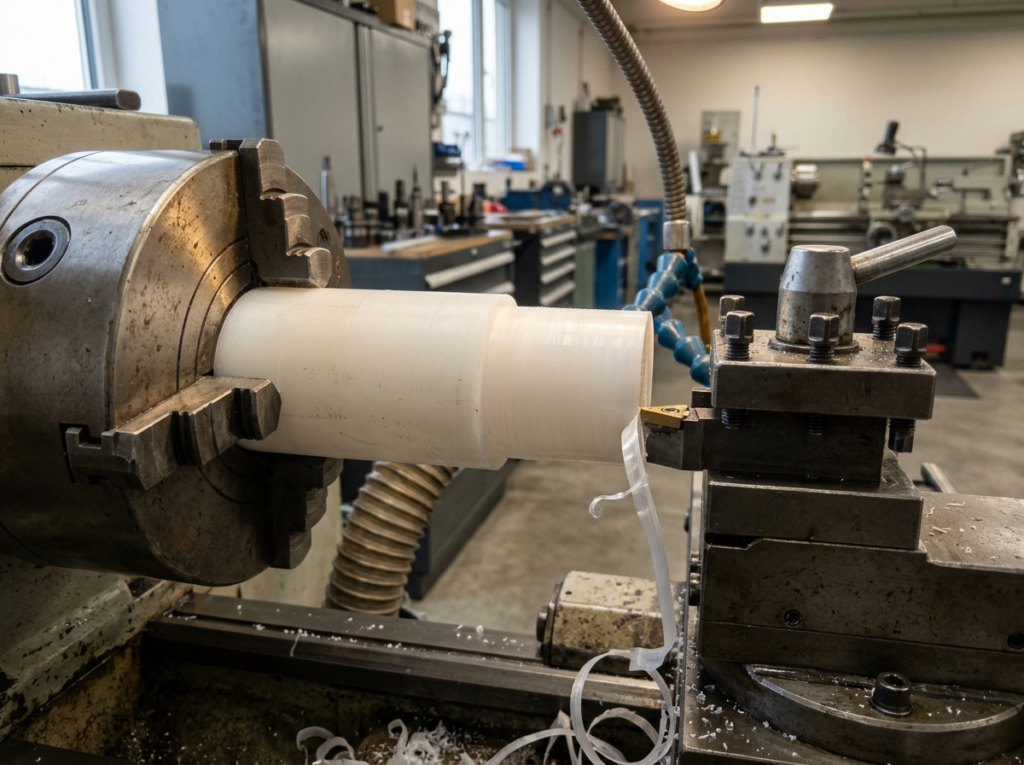
Polypropylene rods are practical starting stock for CNC-turned components such as spacers, bushes, valve-related fittings and custom cylindrical parts. Rod diameter, machining allowance and dimensional tolerances should be specified before ordering. Plastic rod suppliers may also offer alternative materials if PP is not sufficiently wear-resistant or stable for the design.
For both formats, provide finished dimensions, quantity, drawing if available, intended grade, and whether the part will be machined, welded, or mechanically assembled. Review polypropylene sheets and rods for commercial supply information, or explore machined plastic components when the requirement is a finished part.
Polypropylene Compared With HDPE, PVC and Polycarbonate
Several engineering materials share useful characteristics, but their best-fit applications are different. Polythene is a common name for polyethylene; HDPE is one member of that family, not another name for polypropylene.
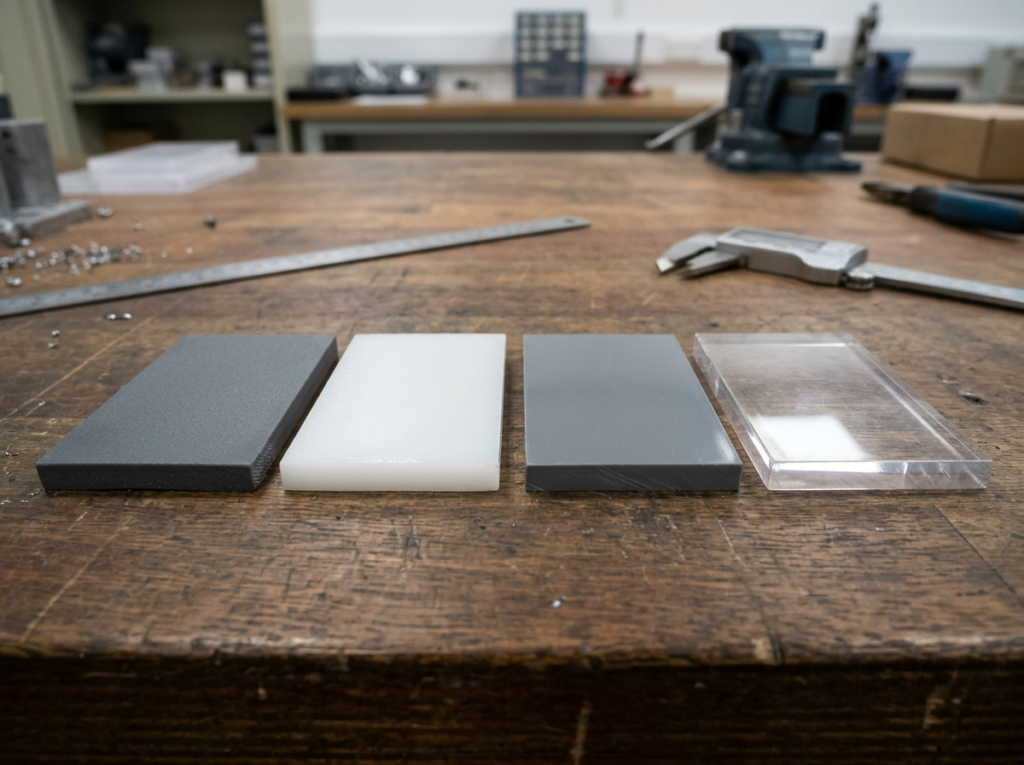
Industrial material selection at a glance; check grade-specific data before final specification.
| Material | Often selected for | Important trade-off |
| Polypropylene (PP) | Chemical equipment, light rigid fabrications | Cold impact and unstabilised UV exposure |
| HDPE | Tough panels, bins, wear and outdoor applications with suitable grades | Typically less rigid and less heat-tolerant than PP |
| PVC Material | Rigid chemical ducting, cladding and pipework | Grade-specific temperature limits and fabrication methods |
| Polycarbonate | Transparent machine guards and impact-resistant glazing | Different chemical compatibility and higher material cost |
If impact in the cold dominates, consider investigating HDPE sheets and rods. For rigid chemical installations, compare PVC sheet and rod options. Also, when visibility and impact resistance matter, evaluate polycarbonate plastic sheets rather than assuming opaque PP is appropriate.
When Should You Consider Another Engineering Plastic?
Polypropylene is not a universal substitute for performance engineered products. If the component must carry tight tolerances, resist continual sliding wear or tolerate exceptionally high temperatures, a different polymer may be a better starting point. A Nylon Rod can be relevant to certain load-bearing, wear-related components, subject to moisture and dimensional requirements.
For protective covers that need different stiffness, appearance, or finishing behaviour, ABS Sheets may warrant comparison. For more demanding chemical, temperature or wear conditions, review advanced engineering plastics. The correct decision begins with the failure mode you need to prevent, not whichever material is easiest to source.
Polypropylene Selection Checklist for Industrial Buyers
Use this shortlist before requesting a quotation or approving material for production:
• Confirm the exact grade. Decide whether PP-H stiffness, PP-C impact performance, or a specialised formulation is required.
• Define the chemical exposure. Record chemical name, concentration, temperature, duration, and cleaning agents; check the grade’s compatibility data.
• Specify operating temperatures. Include continuous temperature, temporary peaks, and possible cold-weather impact conditions.
• Describe the mechanical loads. Identify sustained weight, impact, flexing, vibration, and the risk of creep or panel deflection.
• Choose sheet or rod stock. Match the starting format to the part geometry, machining allowance, and fabrication method.
• Check joining and installation. Allow for welding compatibility, fasteners, thermal expansion, and adequate support.
• Confirm documentation. Obtain relevant grade data and project-specific food-contact or other compliance evidence where required.
• Plan the quantity and waste. Share drawings, thicknesses, and cut lists to reduce unnecessary material purchases.
Note: The purpose of this checklist is to make specification discussions more accurate. It does not replace engineering verification, a manufacturer’s material data sheet, or a site-specific risk assessment.
Frequently Asked Questions About Polypropylene
Not in every application. PP-H is generally stiffer and often handles higher working temperatures, while HDPE commonly performs better against impacts in colder conditions. Compare the relevant grade, loading pattern, and environmental exposure.
PP-H is a homopolymer usually chosen where rigidity matters. PP-C is a copolymer family that can offer improved impact toughness. The best option depends on the exact product and service conditions.
It can be, provided the chosen grade, wall design, and welds suit the chemical, temperature, and loads. Compatibility should be assessed for the specific chemical mixture, including cleaning procedures and long-term exposure.
Polypropylene can be joined through compatible thermoplastic welding processes. Ordinary adhesives often bond poorly without specialised preparation, so welding or mechanical fastening is frequently considered for fabricated industrial parts.
Yes, but long-term outdoor use typically requires a suitable UV-stabilised grade or protective design. Unstabilised polypropylene can degrade with prolonged sunlight, and outdoor temperature swings affect material performance.
Some polypropylene grades are produced for food-contact applications, but the resin name alone does not establish suitability. Confirm the material’s documentation and the specific intended contact conditions before use.
Polypropylene typically melts around 160–170°C, but continuous working temperatures are substantially lower and depend on grade, stress, and exposure duration. Never use melting point as an operating-temperature rating.
Choose sheets for panels, folded fabrications and welded tanks; choose rods for turned cylindrical parts. The final decision should account for size, machining allowances, fabrication requirements, and material availability.
Choosing Polypropylene for Your Next Project
A good polypropylene specification explains what the part must survive, not just what it should look like. So, if you have dimensions, a drawing, or details of the chemical and operating conditions, use those to narrow the grade and format before purchasing.
For material availability, cut-to-size requirements, or fabrication questions in Melbourne, you may explore the industrial plastics range or discuss your project requirements. A clear starting specification makes it easier to assess the right material without committing to an unsuitable option.