
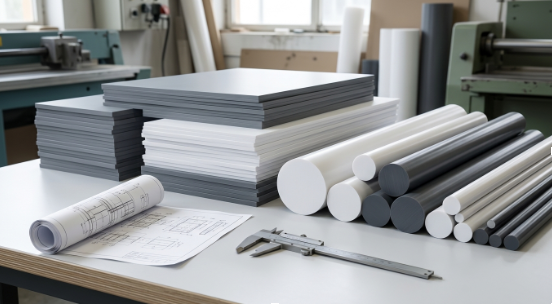
Industrial components must often handle moisture, cleaning chemicals and repeated use. That is why a material suitable for a display panel may fail in a chemical splash tray, even when both look like ordinary plastic sheets.
PVC material, or polyvinyl chloride, combines chemical resistance, electrical insulation and practical fabrication in many rigid grades. Yet temperature, chemical concentration, impact, thickness and joining methods all influence performance.
This guide explains what PVC does well, where its limitations matter, and how to select a suitable grade or decide whether another engineering plastic makes more sense.
What Is PVC Material?
PVC is a thermoplastic polymer formed from vinyl chloride units. Industrial sheets, rods and pipes commonly use rigid, unplasticised PVC, known as uPVC or PVC-U. Other formulations create flexible products.
Quick answer: Rigid PVC is a stiff, moisture-resistant thermoplastic commonly specified for chemical-handling equipment, electrical enclosures, ducting and fabricated industrial parts. Its chemical suitability and working temperature must be checked against the exact grade and operating conditions.
How Is PVC Manufactured?
PVC resin is produced by polymerising vinyl chloride monomer. Manufacturers add stabilisers and processing aids, then form products by extrusion, calendaring or moulding.
Also, formulation matters. Rigid engineering sheet differs from flexible cable covering or foamed signage board, and impact modifiers and UV stabilisation change performance. So, request a data sheet for the specific grade, not just a generic PVC description.
What Are the Main Properties of PVC?
PVC’s main industrial advantage is its balance of stiffness, corrosion resistance and fabrication practicality. The table below describes general characteristics of rigid PVC; it is not a substitute for grade-specific testing or design calculations.
Typical properties of rigid industrial PVC and their practical significance
| Property | Practical meaning | What to verify |
| Rigidity | Helps panels and enclosures hold their shape | Thickness, span, load and deflection |
| Chemical resistance | Useful around many aqueous acids, alkalis and salts | Exact chemical, concentration and temperature |
| Moisture resistance | Suitable for wet or washdown environments | Seals, joints and exposure conditions |
| Electrical insulation | Useful for certain non-conductive components | Required electrical rating and applicable standard |
| Fire behaviour | Many rigid formulations resist sustained ignition | Actual tested fire classification |
| Machinability | Can be sawn, drilled, routed and turned | Tooling, heat control and finished tolerances |
Rigid PVC is relatively heavy compared with HDPE and polypropylene. It also has limitations around high heat, cold-temperature impact and certain organic solvents. So, treat descriptions such as “chemical resistant” or “self-extinguishing” as starting points, not blanket approvals.
Which Grade Fits: Rigid PVC vs Flexible PVC?
Rigid PVC and impact-modified grades
Rigid PVC provides dimensional stability and weldable, relatively stiff walls for tanks, trays, panels and machined parts. Impact-modified grades can help where knocks are likely, but their other properties may differ.
Flexible PVC and foamed PVC
Flexible PVC contains plasticisers for products such as strip curtains and tubing, and foamed PVC is lighter and often suits displays. Neither automatically replaces solid rigid PVC in load-bearing or chemical-containment designs.
Specialised formulations, including clear or UV-stabilised grades, need their own suitability checks. If a supplier proposes a higher-temperature chlorinated PVC grade, review its separate specification rather than assuming ordinary PVC performance limits apply.
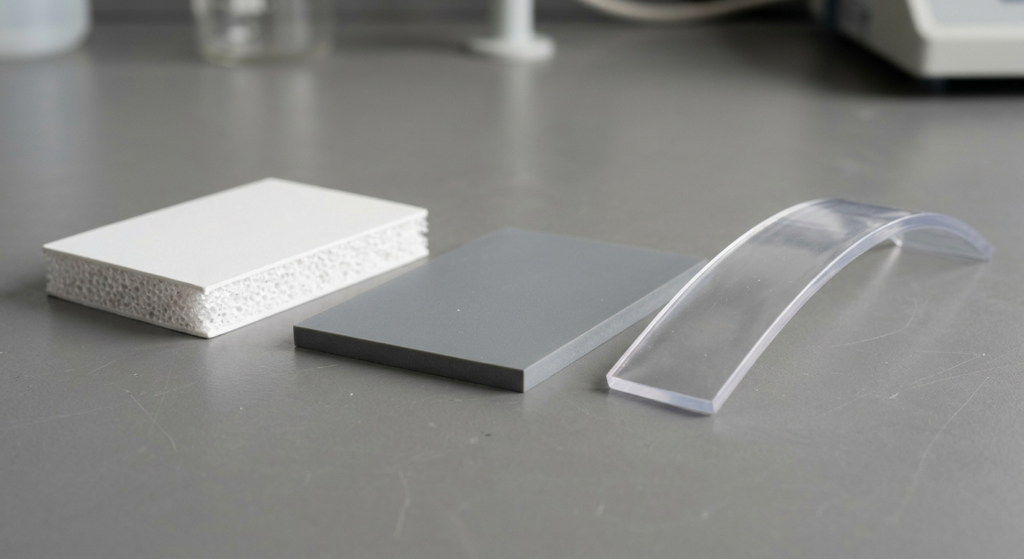
PVC Sheets vs PVC Rods: Choosing the Right Form
Choose PVC sheets for panels, tank walls, splash guards and welded structures. Select thickness for support spacing, loads and joining details, not simply initial price.
Choose PVC rods for turned spacers, sleeves, bushes and fittings. When comparing plastic rod suppliers, confirm diameter, machining allowance, tolerance and grade suitability.
Routing a flat part from sheet may save material, while turning a circular component from rod may reduce machining. Match stock to finished geometry.
Chemical and Corrosion Resistance: What Actually Matters?
PVC resists rust and many aqueous chemicals, making it useful in certain wastewater or chemical-processing components. However, some solvents can soften or damage it: resistance is never universal.
For vessels or splash zones, record chemical, concentration, temperatures and whether exposure is continuous. Include cleaning agents, mechanical stress, welds, gaskets and adhesives.
For hazardous-chemical storage, an appropriate and compatible container is essential. Also, if you want to know why container compatibility and chemical segregation matter, check out Safe Work Australia’s guidance on storing hazardous chemicals.
Selection rule: Confirm the exact formulation against a current chemical-resistance chart or supplier data sheet at the intended concentration and temperature. A positive result at room temperature should not be extrapolated to a hotter, pressurised or continuously stressed installation.
Temperature Limits and Dimensional Stability
About 60°C is a commonly cited upper operating guide for standard rigid PVC, not a guaranteed continuous limit. However, loads, chemistry and grade may reduce the allowable temperature, and panels may deform as stiffness falls.
Cold temperatures can increase impact-cracking risk for some rigid grades. Expansion also affects long panels and restrained fasteners. So, check temperature extremes, mounting clearances and manufacturer data.
If the component must remain strong during prolonged hot operation, investigate polypropylene or a suitable higher-performance polymer rather than treating the approximate PVC temperature limit as a design guarantee.
Electrical Insulation and Fire Performance
Rigid PVC generally insulates electrically and may suit enclosures or barriers. However, dielectric ratings, clearances and compliance requirements depend on the specific grade; not every sheet is approved for electrical installations.
Many rigid PVC grades resist ignition, but none should be assumed fireproof. Flame spread, smoke and electrical requirements depend on formulation and test method. Specify the needed rating.
How Is PVC Machined, Welded and Fabricated?
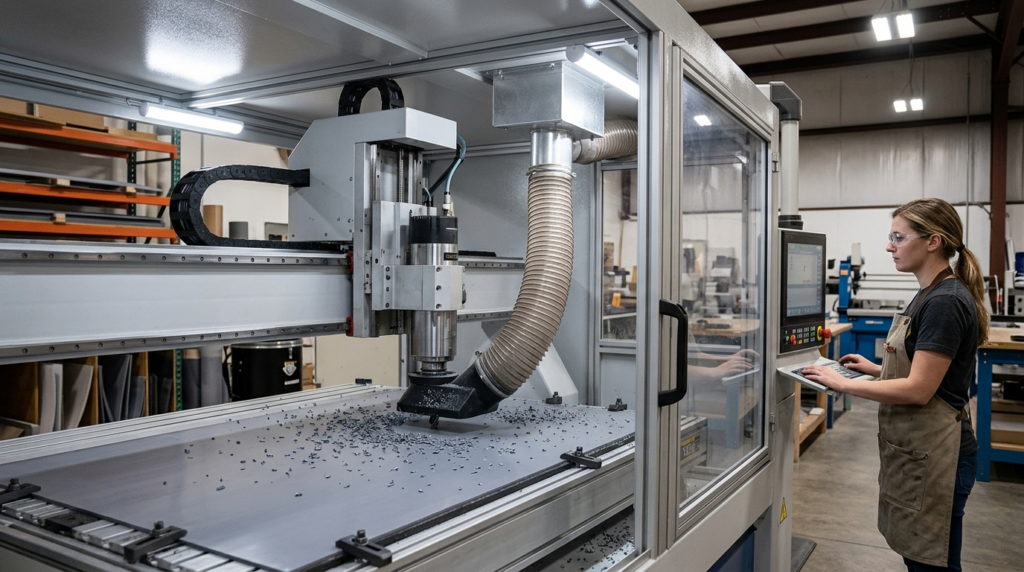
PVC can be sawn, drilled, CNC routed or turned using sharp tooling, chip removal and heat control. Excessive frictional heat may distort edges or produce fumes.
Suitable PVC sheets can be heat-formed, welded or bonded into tanks and enclosures. Welds require compatible filler, preparation and controlled heating; adhesives must suit both grade and service.
Important safety distinction: Do not use conventional laser cutting on PVC. It can release hazardous, corrosive hydrogen chloride fumes and damage equipment. Prefer appropriate mechanical cutting. Identify materials carefully when a project also includes Perspex, polycarbonate or other plastic sheets.
For intricate profiles, repeat parts or assemblies, consider CNC turning and milling or custom plastic fabrication and welding after confirming the method is appropriate for the specific grade.
Where Is PVC Used in Industry?
Chemical processing and water treatment
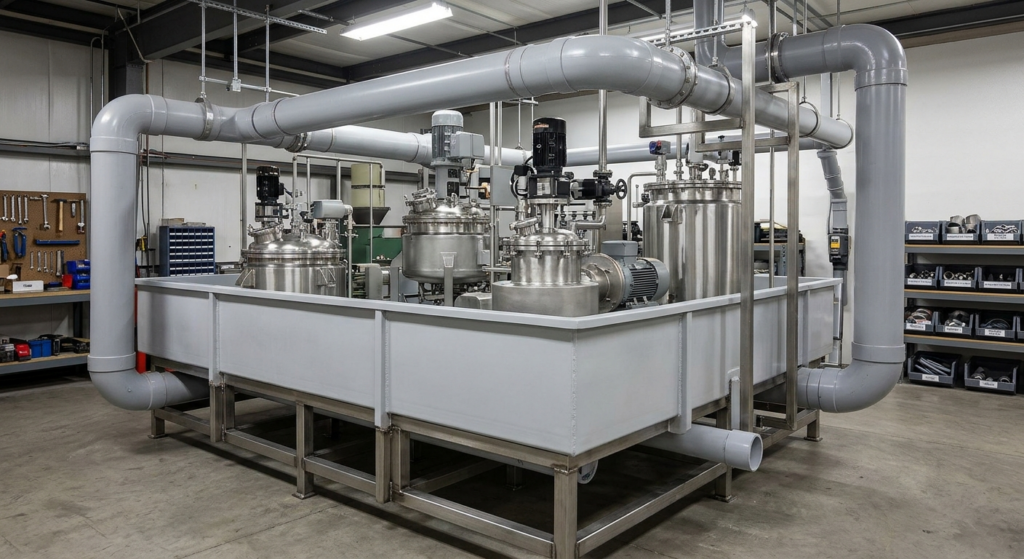
Rigid PVC can suit some dosing equipment, ducting, splash trays and enclosures. Verify chemical compatibility, temperature, loading and welded-joint exposure.
Manufacturing and electrical equipment
Machined spacers, protective panels, electrical covers and fixtures can benefit from PVC’s stiffness and moisture resistance. For moving or heavily loaded parts, friction, fatigue and impact may point to a different material.
Construction, signage and general fabrication
PVC serves in cladding, housings and signage. Foamed board suits lightweight signs; solid sheet may suit more demanding enclosures. Outdoor use needs UV and expansion checks.
PVC vs HDPE, Polypropylene, Polycarbonate and ABS
There is no universally superior engineering plastic. The right choice follows the dominant failure risk: chemical attack, distortion, impact, wear, sunlight or excessive heat.
Industrial plastic comparison for preliminary material selection
| Material | Key advantage | Typical use | Main caution |
| PVC (rigid) | Stiff, often chemically resistant and workable | Panels, tanks, enclosures | Heat, impact and solvent limits |
| HDPE | Tough, moisture-resistant and weldable | Linings, tanks, wear-prone parts | Lower stiffness and thermal movement |
| Polypropylene | Low weight and useful warm-service capability | Chemical equipment, trays and ducting | Cold impact and oxidiser compatibility |
| Polycarbonate | Very high impact resistance; clear grades available | Machine guards, transparent covers | Some chemicals can cause cracking |
| ABS | Good toughness and fabrication versatility | Housings, covers and formed parts | Solvent and outdoor-UV limitations |
HDPE and polypropylene are polyolefins, alongside forms of polythene. Both merit consideration for tough welded chemical equipment. Polycarbonate suits impact-resistant clear guarding; ABS sheets may suit housings where temperature and chemical limits permit.
For optical clarity, Perspex acrylic may be more relevant than grey rigid PVC. For low-friction or demanding chemical applications, a PTFE or Teflon sheet may deserve consideration, subject to its mechanical and cost limitations.
When Should You Choose Another Engineering Plastic?
Choose an alternative when PVC conflicts with the job. For example, consider polypropylene for suitable warmer chemical service, HDPE for tough welded parts, polycarbonate for impact-resistant transparency or specialty polymers for demanding wear and heat.
Substituting one plastic for another should trigger a fresh review of welding, adhesives, tolerances and fixing arrangements. A material that survives the chemical may still fail because of poor joint design or excessive deflection.
How to Choose the Right PVC Material: 8-Point Checklist
Use this checklist before purchasing PVC sheets, rods or a fabricated part. Each answer identifies a specification that should appear in the enquiry or drawing.
- Define the application. State whether the part is a tank, cover, spacer, duct or enclosure, and identify its main function.
- Record chemical exposure. List every relevant chemical, concentration, cleaning agent and expected contact duration.
- Confirm temperatures. Specify continuous, peak and minimum temperatures, including washdown or process excursions.
- Calculate loads and dimensions. Record spans, wall thickness, pressure, impact, support points and allowable deflection.
- Select the grade. Distinguish rigid, modified, clear, foam or specialised PVC using the manufacturer’s actual data.
- Choose sheet or rod. Match stock form and size to the finished part and machining allowance.
- Plan fabrication safely. Specify sawing, routing, turning, approved welding or bonding; exclude conventional PVC laser cutting.
- Request evidence. Ask for material data, chemical-compatibility confirmation and applicable test or compliance documents.
Practical example: A cool, diluted-solution splash tray may suit welded rigid PVC. Hotter liquid or frequent impacts should prompt comparison with alternatives before fabrication.
Frequently Asked Questions About PVC Material
Rigid PVC can suit certain chemical tanks, but suitability depends on the chemical, concentration, operating temperature, pressure and joint design. Confirm the exact grade using compatibility data and an application-specific engineering assessment.
PVC describes the polymer family; uPVC is unplasticised, rigid PVC. Industrial sheets and rods are commonly made from rigid grades, whereas flexible PVC products contain additives that change flexibility and performance.
Yes. Suitable rigid PVC can be sawn, drilled, routed, turned and welded using compatible processes. Fabrication settings and joining materials must match the product grade and intended service conditions.
Approximately 60°C is a common guide for standard rigid PVC, not a universal safe operating temperature. Continuous load, chemical exposure and formulation may require a lower limit. Always check the product data sheet.
Neither material is better in every situation. HDPE often offers greater toughness and flexibility, while rigid PVC can provide higher stiffness. Compare chemical exposure, design loads, temperature and fabrication needs.
No. Conventional laser cutting of PVC can generate hazardous and corrosive fumes, including hydrogen chloride. Use an appropriate mechanical cutting method and follow workplace safety procedures instead.
Use sheet for panels, trays and fabricated walls, and rod for turned circular components. Compare the final geometry, machining allowance, joining requirements and stock availability before ordering.
Choose the Material Around the Job, Not Just the Price
PVC material may suit rigid, chemical-exposed or insulating components when its limits are assessed early. However, a short application brief is more useful than selecting thickness by price alone.
If you are comparing grades or planning a machined component, review the available PVC sheets and rods in Melbourne. For a practical discussion, you may share your dimensions, drawing, operating temperature and chemical exposure through an enquiry page so the suitable material and fabrication route can be assessed.